
How to Choose the Right Pressure Transmitter for Water, Air, Oil, and Gas
- 6 hours ago
- 9 min read
A pressure transmitter that is “close enough” on paper can still fail early, read poorly, or make a control system harder to trust. The right choice depends on more than the pressure range printed on the datasheet. Media, temperature, vibration, wiring, fittings, sealing, and the type of pressure reference all matter.
The goal is simple: pick a transmitter that measures the real process pressure accurately, survives the installation, and speaks the same signal language as the rest of the system.
This guide walks through the main decisions for water, air, oil, and gas applications, including pressure range, gauge versus absolute pressure, output signals, process connections, media compatibility, and environmental protection.
Start with the pressure range and operating conditions
Pressure range is usually the first specification people check, and for good reason. A transmitter must cover the expected working pressure without spending its life at the edge of its limits.
Start with three values:
Normal operating pressure
Minimum expected pressure
Maximum expected pressure, including spikes
The sensor should measure the normal range with good resolution while still tolerating pressure surges. If a pump, compressor, valve, or regulator can create spikes, leave enough margin.
A common mistake is choosing a transmitter with a range that is too wide. For example, if a water line normally runs from 0 to 100 psi, a 0 to 1,000 psi transmitter may survive, but it may not give the best usable signal resolution. Small changes in pressure become a smaller part of the total output span.
A range that is too narrow creates a different problem. Overpressure can damage the sensing element or cause drift over time. In some cases, a brief pressure spike can permanently shift the calibration.
For most applications, choose a range where the normal working pressure sits comfortably within the upper part of the span, but not right at the top. The best choice depends on the transmitter design and the severity of pressure spikes.
Also check these related ratings:
Specification | What to look for | Why it matters |
Measuring range | The calibrated pressure span | Controls accuracy and signal resolution |
Overpressure limit | The pressure the device can withstand without permanent damage | Protects against short process spikes |
Burst pressure | The pressure where mechanical failure may occur | Important for safety reviews |
Static pressure limit | Relevant for differential pressure units | Prevents sensor overload |
Temperature range | Process and ambient limits | Heat and cold affect sensor life and accuracy |
For liquids such as water and oil, watch for water hammer or hydraulic shock. Fast-closing valves and pump starts can generate sharp spikes that exceed the normal line pressure. For air and gas, compressor pulsation can create repeated pressure cycling, which can stress fittings and sensing elements.
Choose gauge, absolute, or sealed gauge pressure
Pressure transmitters do not all measure pressure against the same reference. The three common choices are gauge, absolute, and sealed gauge.
Gauge pressure measures against atmosphere
Gauge pressure is referenced to local atmospheric pressure. It reads zero when the process is open to the surrounding air. This is the right choice for many tanks, pipes, pumps, pneumatic systems, and hydraulic systems.
Use gauge pressure when the equipment cares about pressure above or below the local atmosphere. Examples include:
Water distribution pressure
Compressed air lines
Hydraulic oil circuits
Pump discharge pressure
Filter differential checks, when paired with the right sensor setup
Gauge transmitters often have a vent path to atmosphere. That vent must stay dry and clear. If moisture blocks the vent, the reading can drift or respond slowly.
Absolute pressure measures against vacuum
Absolute pressure uses a sealed vacuum reference. It reads atmospheric pressure as a positive value, not zero. Choose absolute pressure when the process needs a true pressure reading independent of weather or elevation.
Good examples include:
Vacuum systems
Barometric pressure measurement
Gas calculations where absolute pressure affects density
Sealed vessels where atmospheric changes should not affect the reading
Absolute pressure is also common in some gas measurement and lab systems because calculations often require pressure above perfect vacuum.
Sealed gauge pressure suits high pressure work
Sealed gauge transmitters use a fixed sealed reference, often near atmospheric pressure at manufacture. They are useful in higher pressure ranges where small atmospheric changes have little effect on the reading.
For low pressure applications, sealed gauge can introduce unwanted error because changes in local barometric pressure become significant compared with the measured range.
If the pressure range is low, choose the reference type carefully. A small atmospheric change may matter more than the transmitter accuracy printed on the datasheet.

Match the output signal to the control system
A pressure transmitter is only useful if the receiving device can read its output correctly. Match the signal type to the PLC, controller, indicator, data logger, or building management system.
4 to 20 mA suits long cable runs and industrial sites
The 4 to 20 mA current loop remains a common choice because it resists electrical noise well and works over long distances. The live zero at 4 mA also helps detect broken wires, since a failed loop often drops below the normal signal range.
Use 4 to 20 mA when:
Cable runs are long
Electrical noise is likely
The control system already uses analog current inputs
You need a simple and reliable industrial signal
Some transmitters also support HART communication over the same loop for setup and diagnostics.
Voltage outputs work well over shorter runs
Voltage outputs such as 0 to 5 V or 0 to 10 V can work well in compact machines, test stands, and controlled environments. They need more care with wiring because voltage drop and electrical noise can affect the signal.
Use voltage output when:
The cable run is short
The receiving device expects voltage input
The installation has stable grounding
The environment is relatively clean electrically
Digital outputs help when diagnostics matter
Some systems use digital communication such as IO-Link, Modbus, CAN, or other industrial protocols. These can provide pressure readings plus device status, scaling, temperature, and diagnostic data.
Digital outputs help when a machine builder or plant team wants more than a basic analog value. They can also reduce setup errors because configuration can be stored and checked through software.
Before choosing a digital transmitter, confirm the protocol, connector, power supply, update rate, and integration requirements.
Select the right process connection
The process connection is where the transmitter meets the pipe, tank, manifold, or machine. A mismatch here can cause leaks, damaged threads, poor sealing, or slow response.
Common process connection types include:
Connection type | Typical use | Selection notes |
NPT thread | General industrial piping in many US installations | Seals on tapered threads, usually with approved sealant or tape |
BSPP thread | Equipment and hydraulic systems | Often seals with a bonded washer or O-ring |
BSPT thread | Pipework in some regions | Tapered thread, similar sealing concept to NPT but not interchangeable |
SAE thread | Hydraulic and mobile equipment | Often uses an O-ring seal |
Tri-clamp | Sanitary and clean process systems | Common where cleanability matters |
Flange | Larger pipes, tanks, and high pressure systems | Useful when threaded fittings are not suitable |
Do not assume similar-looking threads are compatible. NPT and BSP threads can appear close, but they differ in profile and sealing behavior. Forcing the wrong thread can damage the transmitter or the process fitting.
Also consider port size. A small pressure port can clog in dirty water, heavy oil, or media with suspended solids. A larger port or flush diaphragm may work better where clogging is likely.
For vibrating equipment, such as compressors or hydraulic power units, avoid mounting heavy transmitters directly on a long unsupported fitting. Use a short connection, support the pipework, or mount the transmitter remotely with a capillary or pressure line when needed.
Check media compatibility before anything touches the process
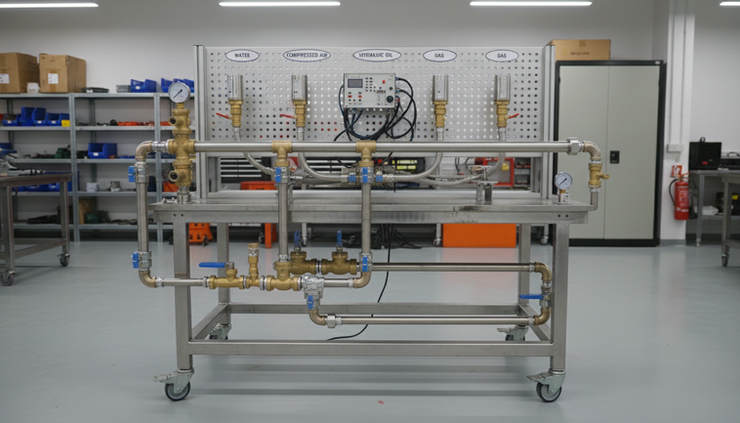
Media compatibility decides whether the transmitter will survive contact with the fluid or gas. The wetted parts, seals, diaphragm, and process connection materials must suit the process.
For many general-purpose applications, stainless steel wetted parts work well. But the seal material and diaphragm design still need attention.
Water applications need corrosion and clogging checks
Clean water is usually straightforward, but real water systems often include treatment chemicals, dissolved minerals, sediment, or temperature swings. Outdoor water systems may also face freezing.
For water, check:
Wetted material compatibility with additives or treatment chemicals
Port size if sediment or scale is present
Protection from freezing or trapped water expansion
Surge resistance if pumps or fast valves are present
A snubber or pulsation dampener can help where pressure spikes are frequent, but it must not slow the reading too much for the control task.
Air applications need dry reference paths and clean wiring
Compressed air usually looks easy because it is clean and non-corrosive in many systems. The hidden issue is moisture. Condensate can collect in low points and reach the transmitter.
For air, check:
Moisture exposure in the line
Compressor oil carryover
Vibration from compressor equipment
Electrical noise near motors and drives
Mounting orientation can help keep condensate away from the sensing element. Filtration and proper air treatment also protect the transmitter.
Oil applications need seal and viscosity awareness
Oil systems can run at high pressure and high temperature. Hydraulic oil, lubrication oil, fuel oil, and heat transfer oil each bring different demands.
For oil, check:
Seal compatibility with the specific oil
Process temperature at the transmitter
Pressure cycling and vibration
Port size for higher viscosity fluids
Cleanliness level in hydraulic systems
High viscosity oil can slow pressure response through a narrow port, especially in cold conditions. If fast response matters, confirm the mechanical design suits the fluid.
Gas applications need safety and certification review
Gas service can be simple or highly controlled depending on the gas. Inert gases, fuel gases, oxygen, refrigerants, and corrosive gases all demand different choices.
For gas, check:
Compatibility with seals and wetted metals
Leak-tight connection design
Hazardous area requirements
Oxygen cleaning requirements, if applicable
Permeation or corrosion risk
For flammable gas or hazardous areas, the transmitter may need specific approvals for the installation method. Match the certification to the site classification, wiring practice, and local rules.
Consider temperature, accuracy, and response time together
Accuracy is not one number in real operation. Datasheets may list accuracy at reference conditions, while the installation sees changing temperature, vibration, and pressure cycles.
Look at:
Accuracy over the full operating temperature range
Long-term stability
Repeatability
Temperature effect on zero and span
Response time
Calibration options
A highly accurate transmitter can still perform poorly if it sits next to a hot pipe, freezes overnight, or receives strong vibration. The installation can matter as much as the sensor grade.
Response time also needs balance. A very fast transmitter may show every pump ripple and compressor pulse. A damped signal may give a steadier value for control, but it may hide short pressure events. Choose based on what the system needs to see.
Specify environmental protection for the installation
Environmental protection covers everything outside the process. A transmitter on a protected indoor panel faces a very different life from one on an outdoor pump skid.
Check the enclosure rating, connector type, cable entry, and materials. IP ratings describe protection against dust and water ingress. NEMA ratings may also apply in some installations. The right rating depends on washdown, rain, condensation, dust, and immersion risk.
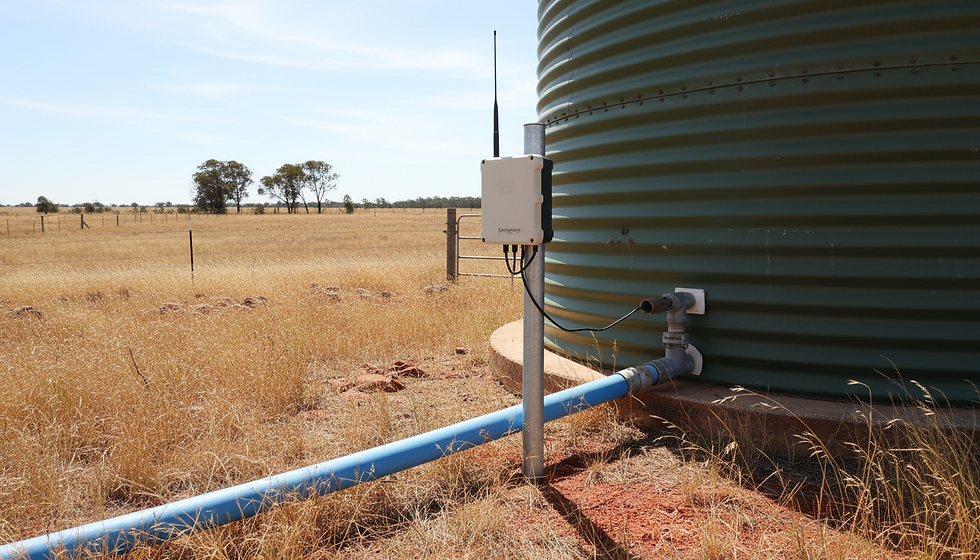
Outdoor installations need extra care. Sun, ice, rain, and temperature swings can attack cables and connectors. Condensation can enter through poor cable glands or damaged seals. A downward-facing cable loop can help water drip away instead of running into the connector.
For harsh locations, check:
IP or NEMA enclosure rating
Connector sealing and cable gland quality
UV resistance for cables
Ambient temperature range
Vibration and shock ratings
Corrosion resistance of housing materials
Hazardous area approvals, when required
Electrical protection matters too. Nearby motors, drives, solenoids, and lightning exposure can create electrical stress. Good grounding, shielding, surge protection, and proper cable routing reduce nuisance faults and sensor damage.

Build a simple selection workflow
A clear workflow prevents missed details. Work through the process before comparing brands or prices.
Define the media
Identify whether the transmitter will measure water, air, oil, gas, or a special mixture. Confirm chemicals, contaminants, temperature, and cleanliness.
Set the pressure range
Record normal, minimum, maximum, surge, and vacuum conditions. Choose a range that gives useful resolution without risking overload.
Choose the pressure reference
Select gauge, absolute, or sealed gauge based on what the measurement must represent.
Pick the output signal
Match the transmitter to the control system input. Confirm supply voltage, wiring type, load limits, and communication protocol.
Confirm the process connection
Match thread type, seal style, pressure rating, port size, and installation geometry.
Check wetted materials and seals
Confirm compatibility with the process media, cleaning fluids, temperature, and pressure cycling.
Review environmental protection
Match the enclosure, connector, cable, and approvals to the physical location.
Plan installation and maintenance
Think through access for calibration, isolation valves, manifolds, snubbers, and replacement clearance.
Common mistakes that lead to poor performance
Many pressure transmitter problems start with small assumptions. These are the ones to avoid:
Choosing a range based only on normal pressure and ignoring spikes
Using gauge pressure where absolute pressure is needed for calculations
Mixing thread standards because they look similar
Ignoring seal compatibility with oil, gas, additives, or cleaning fluids
Installing a transmitter where vibration can loosen fittings
Using a voltage output across a long, noisy cable run
Forgetting outdoor condensation and cable sealing
Selecting a low cost unit without the approvals required for gas service
The cheapest transmitter can become expensive if it causes downtime, leaks, false trips, or repeated calibration checks. A slightly better-matched device often pays for itself through fewer problems.
The right transmitter fits the whole application
A good pressure transmitter is not chosen by range alone. It fits the pressure profile, pressure reference, output signal, connection, media, and environment as one package.
For water, pay close attention to surges, corrosion, freezing, and clogging. For air, manage moisture, vibration, and signal noise. For oil, check seals, temperature, viscosity, and pressure cycling. For gas, give extra care to compatibility, leak control, and required safety approvals.
If the device measures accurately, seals safely, survives the environment, and connects cleanly to the control system, the selection is on the right track. Start with the process conditions, then narrow the options step by step. That approach leads to a transmitter that works reliably after installation, not just one that looks correct on a datasheet.


Comments