
Single Use Temperature Data Loggers for Cold Chain Shipping What to Look For
A refrigerated shipment can look fine when it arrives and still have a hidden problem. The carton is sealed, the gel packs are still cool, and the driver has no incident to report. Yet the cargo may have spent two hours outside its required range during loading, customs clearance, or a transfer between vehicles.
That is why single-use temperature data loggers have become a practical tool for cold chain shipping. They give shippers, receivers, and quality teams a time-stamped record of what happened during transit. For food, pharmaceuticals, pathology samples, laboratory materials, and refrigerated freight, that record can help confirm product quality, support compliance, and settle disputes quickly.
The challenge is choosing the right logger. A cheaper device that does not record often enough, measure the right range, or produce a usable report can create more work than it saves. This guide explains what to check before buying single-use temperature data loggers for temperature-sensitive shipments.

Why single-use loggers suit cold chain shipments
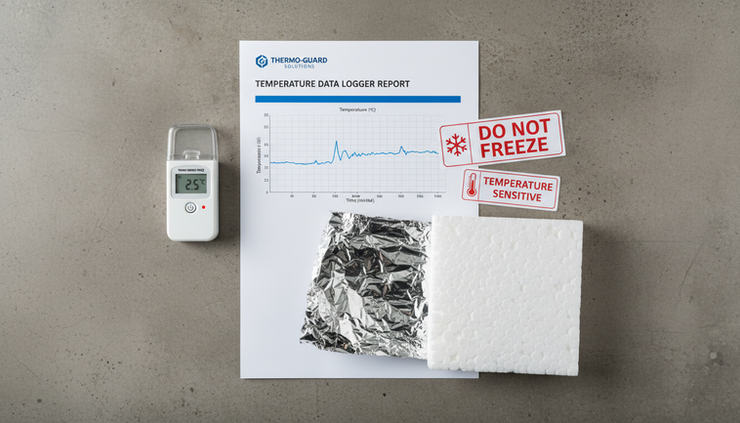
Single-use temperature data loggers are designed for one trip. The sender starts the device, places it with the shipment, and the receiver downloads or reads the results on arrival. Many models include a built-in USB connector and create an automatic PDF report. Some also provide CSV data for further analysis.
This makes them useful when goods move through external transport networks, where reusable devices can be hard to recover. A single-use logger can travel with the package from dispatch to receipt without asking the receiver to return equipment.
They are commonly used for:
Chilled and frozen food consignments
Vaccines, medicines, and pharmaceutical ingredients
Pathology specimens and diagnostic samples
Laboratory reagents and biological materials
Seafood, meat, dairy, produce, and ready meals
Refrigerated road, air, and sea freight
Trial shipments used to validate packaging
The aim is simple. The logger should show whether the product stayed inside the required temperature window for the full trip.
Start with the shipment requirements
Before comparing models, define the job the logger needs to do. A device that works well for chilled food may not be suitable for dry ice, frozen pharmaceuticals, or pathology transport. Start with the product, route, and acceptance criteria.
Ask these questions first:
What temperature range must the product stay within?
How long will the shipment take, including delays?
What level of accuracy is required?
How often should the logger record a reading?
Who will read the logger at the destination?
Do you need a PDF, CSV file, or both?
What alarm limits should trigger concern?
Will the device travel inside the carton, on a pallet, or in a container?
Does the logger need to meet internal quality or customer requirements?
These answers narrow the choice quickly. They also help avoid buying a logger based only on price or battery life.
Check the temperature range before anything else
The temperature range is one of the first specifications to check. The logger must be rated for the full range the shipment may experience, not just the ideal product range.
For example, chilled food may need monitoring around 0 °C to 5 °C, while frozen freight may require sub-zero measurement. Some pharmaceutical shipments may use controlled room temperature, refrigerated conditions, or frozen transport. Laboratory samples can vary widely, depending on the material and transport method.
A logger used outside its rated range may give poor readings, fail to record correctly, or produce data that a quality team cannot accept.
Common cold chain applications often involve these broad categories:
Shipment type | Typical monitoring need | Buyer focus |
Chilled food | Confirm the load remains cold during transit | Range, alarm limits, simple arrival report |
Frozen food | Detect thawing events or temperature rises | Low-temperature capability and trip duration |
Pharmaceuticals | Support quality records for controlled transport | Accuracy, report format, alarm settings |
Pathology samples | Confirm transport conditions for sample integrity | Clear reporting and easy receiver access |
Laboratory samples | Match the logger to the sample and packaging method | Range, interval, and data export |
Refrigerated freight | Monitor pallets, cartons, or mixed consignments | Long trip duration and reliable download |
The logger does not need to cover every possible temperature on earth. It needs to cover the real conditions of the shipment, including likely extremes during handling.

Match the recording interval to the trip
The recording interval controls how often the logger measures and stores temperature. A shorter interval gives more detail. A longer interval extends recording capacity and can make reports easier to read.
For short, high-risk shipments, a frequent interval can help identify brief exposure events. For long refrigerated freight movements, a longer interval may be enough if the temperature changes slowly.
Typical buyer thinking looks like this:
Short local delivery A frequent interval may help capture loading and unloading events.
Overnight courier shipment A moderate interval often gives enough visibility without creating excessive data.
Multi-day road or air freight The interval should balance detail with memory and battery life.
International shipments The logger must cover the full expected journey, including customs, weekends, and delays.
Do not choose a logger only because it can record for a long time. Check the recording duration at the interval you plan to use. Some devices last longer at wider intervals and shorter at frequent intervals.
A practical rule is to choose a logger with more time capacity than the planned trip. Cold chain shipments rarely fail because everything went exactly to plan. Delays are common, especially with air freight, border checks, missed connections, or receiver availability.
Accuracy matters when the limit is tight
Accuracy tells you how close the logger reading is likely to be to the true temperature. This is different from resolution. A device may display fine increments but still have a wider accuracy tolerance.
For many cold chain shipments, an accuracy specification around key temperature points matters more than the full advertised range. If a product must stay between 2 °C and 8 °C, accuracy around refrigerated conditions is especially important. If frozen conditions matter, check performance at low temperatures.
Buyers should look for:
The stated accuracy of the logger
The temperature range over which that accuracy applies
Calibration information or certificate availability
Whether the logger suits regulated or quality-controlled goods
Any internal requirement from customers, auditors, or quality teams
For food distribution, accuracy can help confirm a load remained within agreed limits. For pharmaceuticals, pathology, and laboratory samples, accuracy may be part of a formal quality process. The right choice depends on the risk level and the standards expected by the receiver.
Set alarm limits that match the product
Alarm limits are the high and low temperature thresholds programmed into the logger. When the shipment goes outside those limits, the device records an alarm event. Some loggers show a visual alarm on arrival, while others show the breach in the PDF or CSV report.
Good alarm settings reflect the actual product requirement. They should not be copied from a previous shipment unless the goods, route, and packaging are the same.
For example:
A chilled food consignment may need an upper alarm to show warm exposure.
A refrigerated pharmaceutical shipment may need both high and low alarms.
A freeze-sensitive product may need a low alarm, even if it travels chilled.
A frozen sample may need an upper alarm to detect thaw risk.
Some shipments also need delay settings. A brief spike while a carton is opened may not mean the product temperature changed. In other cases, even a short breach may matter. If the logger supports alarm delay or cumulative alarm settings, choose settings that match the product risk and quality requirements.
Alarm settings should reflect product acceptance rules, not just a convenient temperature range.
Make sure the trip duration covers real-world delays
Trip duration is more than the scheduled transport time. It includes packing, staging, pickup, transit, transfer points, weekends, customs, receiver handling, and time before download.
A shipment planned for 48 hours may need a logger that can record for several days. International refrigerated freight may need far longer. For seasonal peaks or remote destinations, add extra margin.
Check these points before buying:
Maximum recording time at the chosen interval
Battery life at expected temperatures
Start delay options if the logger is packed before pickup
Memory capacity
Whether the device stops at full memory or overwrites data
Shelf life before activation
Shelf life is easy to overlook. Single-use loggers may sit in a warehouse before use, so procurement teams should check expiry dates and storage conditions. A bargain pack of devices is not a bargain if the shelf life is too short for the shipment schedule.

Look for easy USB access and automatic reports
A logger is only useful if the receiver can retrieve the data. Built-in USB connection is a major advantage for many shipments. The receiver can plug the logger into a computer and access the report without special hardware.
Many single-use USB loggers generate an automatic PDF report. This is useful for quick review, record keeping, and sharing with customers. Where supported, CSV export gives access to the raw readings for charting, investigation, or import into quality systems.
When comparing reporting features, check:
Whether a PDF report generates automatically
Whether CSV export is available
Whether special software is required
Whether the report includes start time, stop time, alarms, minimum, maximum, and average temperature
Whether the graph is clear and easy to interpret
Whether the report shows serial number or device ID
Whether time zone settings are clear
Whether the receiver can access the file on common operating systems
For many businesses, the automatic PDF is the main record. For quality teams, CSV can be just as important because it allows deeper review. If a customer asks for raw data and the logger only provides a locked summary, that can become a problem after the shipment has already arrived.
Choose the right logger for the application
Different sectors use temperature data in different ways. The same logger may not suit every cold chain task.
Food and beverage shipments need practical evidence
Food cold chain monitoring often focuses on freshness, safety, and customer acceptance. Chilled products such as meat, seafood, dairy, prepared meals, fruit, and vegetables can be sensitive to warm exposure. Frozen food can suffer if it partially thaws and refreezes.
Food buyers often value:
Simple start and stop operation
Clear pass or fail alarm indication
Affordable single-trip use
Reports that can be shared with receivers
Temperature range suited to chilled or frozen transport
For routine food distribution, ease of use matters. Packing teams should be able to start the logger correctly without lengthy training.
Pharmaceuticals need tighter documentation
Pharmaceutical cold chain shipments often require stronger documentation. Temperature records may support quality release, customer requirements, or internal compliance processes. Common examples include medicines, vaccines, clinical trial materials, and active ingredients.
For these shipments, buyers should pay close attention to accuracy, calibration information, alarm configuration, and report integrity. The report should clearly show whether the shipment stayed within the required range.
Before purchasing, quality and logistics teams should agree on what report format will be accepted.
Pathology and laboratory samples need clear chain-of-condition records
Pathology specimens and laboratory samples can be time and temperature sensitive. A logger can help confirm that transport conditions matched the sample requirements. It can also help investigate delays or unexpected results.
Buyers should match the logger to the sample type, packaging method, and expected route. For mixed sample shipments, choose alarm settings carefully so the record is meaningful.
Refrigerated freight needs endurance and visibility
Palletised freight, long-haul refrigerated transport, and multi-leg shipments place extra demand on recording time and device reliability. The logger may be placed inside a carton, on a pallet, or in a container.
For larger freight movements, it can make sense to use more than one logger. A single device may not represent the whole load, especially if pallets sit in different positions within a truck or container.
Check the practical details before purchasing
The product sheet tells part of the story. The real test is whether the logger fits your warehouse process, shipping route, and receiver expectations.
Use this buyer checklist before ordering:
Confirm the required temperature range for the product.
Choose the recording interval based on trip length and risk.
Check accuracy at the temperatures that matter.
Set alarm limits to match product acceptance criteria.
Allow extra trip duration for delays.
Confirm USB download works for the receiver.
Check whether PDF and CSV reporting are supported.
Review shelf life and storage conditions before use.
Confirm start method, stop method, and start delay options.
Make sure instructions are simple for packing teams.
Check if calibration documentation is available if required.
Decide where the logger will be placed in the shipment.
Keep a sample report on file before using the logger for critical goods.
Small process details matter. If a logger must be started by holding a button for several seconds, staff need to know what the indicator lights mean. If the receiver must stop the device before plugging it in, that instruction should travel with the shipment. If the report time zone matters, check it before the first live consignment.
Avoid common buying mistakes
Many problems come from choosing a logger too late in the shipping process. Procurement may buy the lowest-cost option, while the quality team later finds that the data does not meet the requirement.
Common mistakes include:
Choosing a logger with the wrong temperature range
Ignoring accuracy and calibration needs
Setting alarm limits too wide to be useful
Recording too infrequently for a short, sensitive trip
Underestimating delays and total trip time
Assuming every USB logger creates both PDF and CSV files
Placing the logger where it measures the cold pack rather than the product environment
Failing to test the report before using the device on real shipments
A simple trial shipment can prevent these issues. Run the logger through the actual packing process, send it through the normal route if possible, and review the report with the people who will use it.
When to consider ProSense Instruments
ProSense Instruments offers a range of temperature data logger options for cold chain and refrigerated shipping applications. For buyers comparing devices, the value is not only in the logger itself. It is also in matching the model to the shipment, report needs, trip duration, and temperature range.
Before placing an order, prepare the key details:
Product type and required temperature limits
Expected trip length and possible delays
Chilled, frozen, ambient, or specialist temperature conditions
Desired recording interval
Need for PDF, CSV, or both
Quantity needed and how often shipments occur
Any calibration or documentation requirements
With that information, it is easier to choose a logger that fits the shipment rather than forcing the shipment to fit the logger.
The right logger gives confidence at arrival
Single-use temperature loggers are a small part of the cold chain, but they carry a lot of weight. They help show what happened between dispatch and receipt, especially when products move through couriers, freight networks, cold rooms, airports, and loading docks.
The best choice comes from matching the logger to the product risk. Check the temperature range, accuracy, recording interval, alarm limits, trip duration, USB access, and reporting format before you buy. Then test the workflow so the packing team, carrier, receiver, and quality team all know what to expect.
For food, pharmaceuticals, pathology, laboratory samples, and refrigerated freight, that preparation can turn a cold chain shipment from a guess into a documented record. ProSense Instruments' temperature data logger range is a good place to start when selecting a single-use logger for your next temperature-sensitive shipment.


Comments