
Remote Tank Level Monitoring with Dragino Distance Sensors
A tank usually runs out at the worst time. A rainwater tank drops below the pump intake, a diesel day tank needs a site visit, or a grain silo is lower than expected before the next delivery. A low-cost distance sensor can prevent most of that guesswork.
Dragino distance sensors are a practical way to measure level without putting electronics into the liquid or stored material. Mounted at the top of a tank, silo, or bin, the sensor measures the empty space between itself and the surface below. Once that distance is known, software can turn it into level, volume, percent full, or refill alerts.
The simple idea hides a few important details. The sensor type, mounting position, blind zone, target surface, and vessel shape all affect the result.
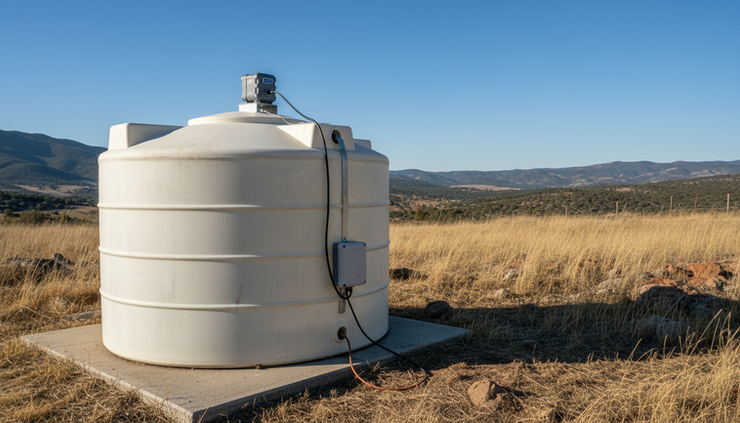
How top-mounted distance sensing works
A distance sensor sends energy toward the surface of the stored material and measures the return. That energy may be sound, light, or radio waves, depending on the sensor.
For tank level work, the key reading is not the level itself. It is the distance from the sensor to the surface.
If the tank is empty, that distance is long. If the tank is full, that distance is short. The device sends readings over a network, often LoRaWAN in Dragino systems, so the level can be checked from a dashboard, alerting tool, or local server.
A basic setup has four parts:
A distance sensor mounted above the product
A power source, often battery or external DC power
A gateway or cellular path that carries the data
Software that converts distance into useful level data
The measurement is non-contact, which helps with dirty water, chemicals, grain, pellets, wastewater, and other materials where floats or probes can stick, corrode, or foul.
Ultrasonic, LiDAR, and radar sensors each suit different tanks
Dragino has distance-sensing devices that are used in remote monitoring projects, often with LoRaWAN connectivity. The right sensing method depends on the vessel, the material, and the environment around the sensor.
Sensor type | Best fit | Watchouts |
Ultrasonic | Water tanks, open channels, simple indoor tanks, many low-cost level jobs | Foam, vapor, turbulence, angled surfaces, and temperature changes can affect readings |
LiDAR | Clean target surfaces, short to moderate distances, precise point measurement | Dust, steam, condensation, dirty lenses, and very dark or absorbent surfaces can reduce reliability |
Radar | Dusty silos, outdoor tanks, vapor, foam, and difficult industrial spaces | Costs more and still needs good mounting and aiming |
Ultrasonic distance sensors
Ultrasonic sensors use sound pulses. They are common because they are affordable and easy to understand. For many water tank and wastewater jobs, they work well.
They need a clear acoustic path to the surface. Heavy foam can absorb sound. Agitated water can scatter the return. Internal ladders, pipes, tank ribs, and sidewalls can create false echoes.
Temperature also matters because sound speed changes with air temperature. Many devices compensate for this, but rapid changes inside a sun-baked tank can still cause readings to wander.
LiDAR distance sensors
LiDAR uses light, usually from a small laser or optical emitter. It can give a tight measurement point, which helps when the sensor needs to look through a small opening.
LiDAR works best when the target surface reflects enough light back to the sensor. Clean water can be tricky because it may reflect like a mirror at some angles or let light pass through. A floating target plate can help in some applications, but it adds a moving part.
Dust, fog, steam, and condensation on the sensor window are bigger issues for LiDAR than for many radar sensors.
Radar distance sensors
Radar uses radio waves. It is often the best choice for silos, dusty bins, and tanks with vapor or foam. It can handle conditions that make ultrasonic or optical sensing less stable.
Radar is not magic, though. A poor mounting position can still cause false echoes. Narrow tanks, internal bracing, and highly angled material piles can make the returned signal harder to interpret.
For many sites, radar costs more than ultrasonic. The added cost can still make sense when a missed refill or a false alarm is expensive.

Mounting position matters more than it seems
Most level problems start at installation. A sensor can only measure what it can see.
Mount the sensor so it points straight down at a clear section of the surface. Keep it away from fill pipes, agitators, ladders, ribs, pump outlets, and tank walls. If the sensor is near the sidewall, the beam may catch the wall before it reaches the true surface.
For water tanks, the best position is often near the center, but not directly above a fill stream. The surface under an inlet may foam, splash, or churn during filling. That can cause unstable readings just when the level is changing quickly.
For silos and bulk solids, the best spot may not be the center. Grain, pellets, powders, and feed often form a cone when filling and a dip when emptying. A center-mounted sensor may read the top of the cone, while a side-mounted sensor may read a lower area. Neither is “wrong,” but each tells a different story.
A good mounting location has:
A direct line of sight to the measured surface
Enough distance from tank walls and internal objects
Protection from direct impact during filling
Easy access for cleaning and inspection
A stable surface that does not flex or vibrate
Weather protection for outdoor installations
In metal tanks or silos, use suitable glands and brackets. In plastic tanks, avoid thin lids that sag, twist, or move in wind. A moving mount creates a moving measurement.
For outdoor tanks, protect the sensor from standing water, ice, and direct physical damage. A simple raised boss or short stilling tube can help, as long as it does not interfere with the beam.
Blind zones set the real full point
Every distance sensor has a near area where it cannot measure reliably. This is often called the blind zone, dead band, or minimum measuring distance.
If the liquid rises into that zone, the sensor may report bad readings or no reading. The blind zone must be part of the tank design and calibration.
Think of the sensor face as the zero point. The first usable reading starts some distance below it. That means the tank’s “100 percent full” level must sit below the blind zone.
A safe setup leaves space for:
The sensor’s minimum measuring distance
Splashing or waves during filling
Foam or product buildup
Thermal expansion of the stored liquid
Any required overflow path or vent space
Do not mount the sensor flush against the maximum liquid height and expect it to read to the very top. A remote tank level monitoring with Dragino distance sensors project works best when the full point is defined as a safe working level, not the absolute physical top of the tank.
For example, if a tank is 8 feet deep and the sensor needs clear space near its face, the measured working range may be slightly less than 8 feet. That is normal. The software should treat the safe maximum fill height as 100 percent.
Target surfaces can help or hurt the reading
The stored material is part of the measurement system. A calm water surface is very different from foamy wastewater or a pile of grain.
Water and other liquids
Calm water is usually easy for ultrasonic sensing. It gives a broad, flat target. Problems start when the surface moves.
Common causes of noisy liquid readings include:
Fill streams hitting the surface
Pump return lines
Aeration
Foam
Steam or heavy vapor
Condensation on the sensor face
A stilling well can help in some liquid tanks. This is a vertical tube with openings that let the liquid rise and fall inside, while shielding the measurement area from waves. The tube must be wide enough for the sensor beam and vented so the level inside matches the tank.
For rainwater and farm tanks, a simpler fix is often enough. Move the sensor away from the inlet and average the readings in software.
Powders, grain, pellets, and feed
Bulk solids are harder. The surface is rarely flat. Material piles up when filling and drains unevenly when emptying.
A single-point distance sensor measures the spot directly below it. It does not see the whole surface. In a tall silo, the difference between the highest cone point and the average material level can be large.
For inventory estimates, place the sensor where the reading best represents the average level during normal use. If accuracy matters, compare sensor readings with known fills and withdrawals over time. The goal is a useful calibration curve, not just a geometry formula.
Dust is another issue. Ultrasonic sensors may struggle with dense dust clouds during filling. LiDAR may lose signal if dust coats the lens. Radar is often stronger in these conditions.

Convert distance into level with the right reference point
The most common mistake is using the total tank height without checking where the sensor actually sits.
Start with a known reference:
The sensor face
The bottom of the tank
The safe full level
The usable empty level, such as a pump intake height
The basic formula is:
`level = empty distance - measured distance`
The empty distance is the distance from the sensor face to the zero-level reference. That reference may be the tank bottom, the outlet height, or the lowest usable level.
If the sensor reads 6 feet to the product surface, and the empty distance is 8 feet, then:
`level = 8 ft - 6 ft = 2 ft`
For percent full:
`percent full = level / usable level range × 100`
If the usable level range is 7 feet, then:
`2 ft / 7 ft × 100 = 28.6 percent`
This approach works for rectangular tanks and vertical cylinders where volume changes evenly with height.
Volume for simple tank shapes
For a rectangular tank:
`volume = length × width × level`
For a vertical cylindrical tank:
`volume = tank floor area × level`
If the tank has a flat bottom and straight sides, the conversion is easy. The level rises at a constant rate per gallon or liter added.
Horizontal cylindrical tanks are different. The volume does not rise evenly with height. A small level change near the bottom or top represents less volume than the same level change near the middle. For these tanks, use a lookup table or a tank chart.
Conical-bottom tanks, hoppers, and irregular vessels also need a table or custom formula. Many monitoring platforms allow a calibration table, where each level value maps to a volume.
Percent full may be more useful than gallons
Exact volume sounds attractive, but it is not always needed. For refill planning, percent full and days of supply can be more useful.
A farm water tank may only need alerts at 60 percent, 30 percent, and 15 percent. A feed bin may need a reorder point based on usage rate. A chemical tote may need a “do not run dry” warning.
Use the measurement that supports the decision.
Use filtering without hiding real problems
Distance readings can jump for valid reasons. A splash, a bird near an open tank, a gust of dust, or foam can all affect a single sample. Software filtering can make the level trend easier to read.
Useful filtering methods include:
Median filtering across several readings
Moving averages
Ignoring values outside the physical tank range
Requiring repeated low readings before sending an alert
Flagging sudden impossible changes for review
Filtering should not hide real changes. If a tank can fill quickly, the system must still catch that rise. If a leak can drain the tank overnight, heavy smoothing might delay the alarm.
A good rule is to filter noise, not reality. Match the report interval and smoothing to the process. A rainwater tank may only need a reading every few hours. A process day tank may need much more frequent updates.
Battery life also affects reporting. More readings and more radio messages usually mean shorter battery life. For remote sites, set the reporting rate based on how fast the level can change and how soon someone must respond.

Plan the network before the tank is full
The sensor is only useful if its data gets out. Many Dragino deployments use LoRaWAN, which works well for low-power sensor readings over long distances when a gateway is within range. Some projects use cellular or other links instead.
Before final mounting, test the signal with the lid closed and the tank in normal conditions. Metal tanks, earth banks, concrete rooms, and remote valleys can all weaken signals. A sensor that works on a bench may not work from the far side of a steel silo.
Check these items during commissioning:
Confirm the device joins the network from its final location
Record signal quality while the tank is closed
Test readings at known levels if possible
Verify units in the platform
Set alert thresholds based on usable level, not total height
Label the tank, device ID, and measurement reference
Keep a simple record of the installation. Include the sensor height, empty distance, blind zone allowance, tank dimensions, and any offset used in software. That record saves time later when readings look odd or a sensor is replaced.
Common problems and practical fixes
Most poor readings trace back to a short list of causes.
Problem | Likely cause | Practical fix |
Reading jumps during filling | Splashing, foam, or dust | Move the sensor away from inlet, add filtering, or use radar for dusty service |
Tank shows full too early | Blind zone ignored | Lower the full setpoint or raise the sensor |
Level is always offset | Wrong empty distance or reference point | Re-measure from the sensor face to the zero-level reference |
Readings fail in sunlight or condensation | Optical path affected | Clean the lens, shield the mount, or choose another sensing method |
Silo inventory does not match deliveries | Uneven material surface | Build a calibration table from real fill and drawdown records |
Signal drops after installation | Poor radio path | Reposition antenna, add gateway coverage, or use another backhaul |
Remote measurement improves decisions, but it does not remove the need for basic inspection. Sensors should be checked for dirt, corrosion, insect nests, loose brackets, and water ingress as part of normal site maintenance.
A reliable tank level system starts with clear assumptions
A distance sensor does not measure “how much is in the tank” by itself. It measures the gap to a surface. The quality of the final level or volume reading depends on how well the installation defines that gap.
Choose ultrasonic for simple liquid tanks where cost matters and conditions are friendly. Choose LiDAR when a clean, narrow optical measurement fits the site. Choose radar when dust, vapor, foam, or difficult surfaces make other methods unreliable.
Mount the sensor where it has a clear view. Respect the blind zone. Understand the surface below it. Convert distance using the real empty distance, not a guessed tank height. Then turn the result into the number that matters, whether that is percent full, gallons remaining, or a refill alert.
Get those basics right, and a small top-mounted Dragino distance sensor can replace routine site checks with steady, useful level data.


Comments