
Planning Instrument Spares for Plant Shutdowns with ProSense Instruments
A scheduled shutdown can expose every weak spot in an instrument spares plan. A failed pressure transmitter, cracked pH probe or obsolete flow meter might be a small item on a bill of materials, but it can hold up a critical path job if the replacement is not ready when the plant is open.
The best shutdown plans treat instrumentation as more than a maintenance afterthought. They identify critical sensors, meters and probes early, check what is already on site, confirm what needs replacement, and lock in supply before the outage window begins.
ProSense Instruments can support Australian sites as a purchasing contact for replacement instrumentation, with availability and lead times confirmed for each order. That gives maintenance and reliability teams clearer choices before the plant is opened, not when the pressure is on.
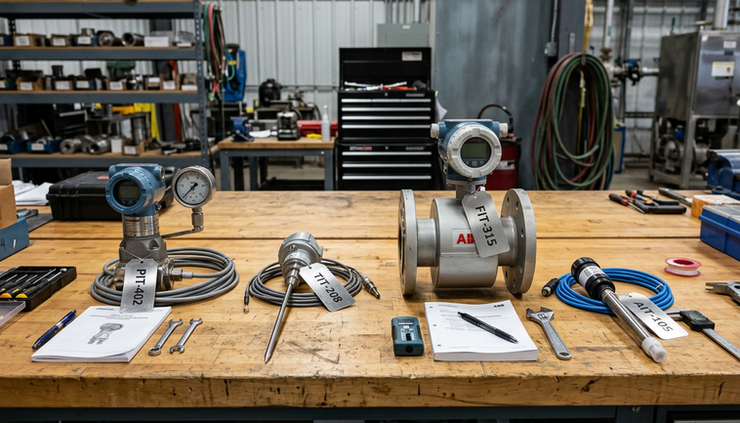
Instrument spares deserve early planning
Mechanical spares often get the most attention before a shutdown because valves, gaskets, bearings and rotating equipment are obvious outage items. Instrumentation can seem smaller and easier to source, but that assumption causes problems.
Many instruments are built to suit a process condition. A level transmitter may need the right measuring range, flange size, process connection, wetted materials, output signal, approval and cable entry. A conductivity probe may need a specific cell constant, insertion length and temperature compensation. A pressure switch might look standard until the switching range, diaphragm material or hazardous area requirement rules out common substitutes.
Shutdown work also creates extra risk for instruments that were working before the outage. Devices can fail during removal, cleaning, isolation, hydrotesting, recommissioning or loop checks. Old probes can seize in fittings. Corroded threads can strip. Cable glands can crack. Displays can fail after power is restored.
Planning spares early helps prevent three common shutdown delays:
A like-for-like replacement is no longer available.
The correct model exists, but the lead time is longer than the outage window.
A near match arrives, but it does not suit the process, wiring or certification needs.
A clear instrument spare plan reduces these risks before the plant is offline.
Start with the instruments that can stop the plant
Not every instrument needs a spare on the shelf. The goal is to find the devices that can affect safety, environmental compliance, production restart or the shutdown schedule.
A useful review starts with the plant areas and systems that will be opened during the outage. From there, build a list of sensors, meters and probes connected to those assets.
Common candidates include:
Pressure transmitters, pressure gauges and pressure switches
Temperature sensors, thermowells, transmitters and controllers
Flow meters, flow switches and flow totalisers
Level transmitters, level switches and sight glass instruments
pH, ORP, conductivity, dissolved oxygen and turbidity probes
Gas detection sensors and fixed gas monitors
Weighing instruments, load cells and belt scales
Vibration sensors, speed probes and proximity sensors
Position feedback devices and limit switches
Chart recorders, indicators and signal isolators
The first pass should focus on consequence. Ask what happens if the instrument fails during the shutdown or during restart.
A device is usually critical if it does one or more of the following:
Trips equipment or protects people
Monitors a regulated discharge or emission point
Confirms a safe condition before restart
Controls a process variable that must be stable for production
Sits on equipment that will be difficult to access once the plant is running
Has a history of failure, drift, fouling or damage
Has a long supply lead time or is no longer a standard item
This is where operations, maintenance, electrical and instrumentation teams should compare notes. The maintenance system may show failures, but operators often know which meters drift, which probes foul quickly and which local indicators are hard to read during normal operation.

Build a practical instrument criticality list
A criticality list does not need to be complex to be useful. It should be simple enough for the shutdown team to use and detailed enough for purchasing to source the right replacement.
A basic instrument review table can include:
Field | Why it matters |
Tag number | Links the spare to the asset, drawing and loop documentation |
Instrument type | Identifies whether it is a sensor, meter, probe, switch or transmitter |
Service | Shows the process medium and duty |
Location | Helps plan access and installation timing |
Make and model | Provides the starting point for sourcing |
Process connection | Prevents mechanical fit issues |
Range and output | Confirms measurement and signal compatibility |
Materials | Matches chemical, temperature and pressure conditions |
Approval requirements | Captures hazardous area or compliance needs |
Current condition | Shows whether replacement is planned or precautionary |
Spare status | Confirms whether the site already holds a usable spare |
Required date | Aligns supply with the shutdown schedule |
Once the list is built, sort it into priority groups.
Shutdown critical instruments
These devices must be available before the outage begins. If they fail, replacement cannot wait.
Restart critical instruments
These devices may not be touched during maintenance, but the plant cannot restart safely or efficiently without them.
High-risk ageing instruments
These are older units, instruments still in service past expected life, obsolete models or devices with repeated faults.
Convenience spares
These are lower-risk items that are still sensible to have available, especially if they are low cost and common across the site.
This ranking helps avoid buying every possible spare. It also helps purchasing teams focus first on the instruments that could delay the shutdown.
Check identification details before ordering replacements
Instrument spares are easy to misorder when the site relies only on a short description. “Pressure transmitter, 0 to 10 bar” is not enough.
Before raising a purchase request, check the full identification details from the installed instrument and the documentation. The nameplate, data sheet, loop drawing, maintenance record and calibration record may each hold part of the answer.
For many replacement instruments, confirm these details:
Manufacturer and full model code
Measuring range and calibrated range
Accuracy or performance requirement
Output signal, such as 4 to 20 mA, HART, relay or pulse
Supply voltage
Process connection size and type
Wetted materials
Ambient and process temperature limits
Pressure rating
Ingress protection rating
Hazardous area classification, if required
Cable entry or connector type
Display, remote mount or local indication needs
Calibration certificate or test report requirements
For probes, also check insertion length, body style, seals, electrode material, cable length and any compatible analyser requirements. Analytical instruments often depend on matching the sensor to the transmitter or controller. A probe that looks physically similar may not be compatible.
For meters, check installation conditions as well as the meter itself. Flow meters depend on pipe size, lining, electrode material, flange rating, grounding needs and straight-run conditions. Level devices may depend on vessel geometry, dielectric constant, foam, vapour, build-up or agitation.
If the existing instrument is obsolete, a direct replacement may not be possible. That does not need to become a shutdown surprise. A planned review gives time to identify a suitable alternative and check whether adaptors, brackets, wiring changes or configuration changes are needed.
Confirm what is already in the store
A storeroom count should happen before new instruments are ordered. Many sites hold spares that are hard to find, poorly labelled or not linked to current asset records.
The count should confirm more than quantity. A spare only helps if it is fit for use.
Check whether stored instruments are:
The correct model and range
Undamaged and sealed
Within any recommended storage conditions
Supplied with required certificates or manuals
Still compatible with the current installed base
Clearly tagged to the relevant asset or loop
Calibrated, if calibration is required before installation
Take care with old analytical probes and sensors that age in storage. Some probe types have storage limits or need to be kept wet in the correct solution. Batteries, elastomers, seals and sensor membranes can also degrade over time.
A good shutdown review often finds duplicate slow-moving spares in one area and missing critical spares in another. Cleaning up that picture before the outage reduces waste and improves readiness.

Use ProSense Instruments to confirm supply before the outage
Once the critical list is clear, the next step is checking what can be supplied, what needs configuring and what has a longer lead time. This is where ProSense Instruments can act as an Australian purchasing contact for replacement instrumentation.
For each order, ProSense Instruments can work from the details supplied by the site and help confirm availability and lead times. That gives the maintenance team a clearer view of which items can be sourced in time and which ones need an alternative plan.
This support is especially useful when the site needs to replace or source:
Pressure, temperature, flow and level instruments
Switches, gauges, meters and transmitters
Analytical probes and associated equipment
Signal conditioning and interface components
Similar replacements for older or hard-to-source instruments
The purchasing process works best when the request includes complete information. A photo of the nameplate can help, but it should not be the only reference. Include the tag number, process duty, required date, full model code if available, and any shutdown constraints.
The key point is timing. If an item has a longer lead time, the team can still respond before the outage. They may approve an equivalent, adjust work sequencing, repair and refit the existing unit, or change the shutdown scope. If the delay is discovered after the instrument has failed, the options shrink quickly.
Plan for equivalents with care
Equivalent instruments can be a practical option when an exact replacement is unavailable or too slow to source. They still need careful checking.
A suitable equivalent should match the function, fit and compliance needs of the original instrument. The assessment should cover both the physical installation and the control system.
Check these points before accepting a substitute:
Will it fit the same process connection or mounting point?
Does it use compatible wetted materials?
Does it cover the required measuring range?
Does it provide the same output signal?
Will the control system scaling need to change?
Does it meet the required approvals?
Can it be calibrated and tested before installation?
Are wiring, glands or connectors different?
Will operators see a different display or alarm behaviour?
Small differences can create commissioning delays. A transmitter with the correct range but a different cable entry may need new glands. A probe with the right chemistry but the wrong length may not sit in the process correctly. A flow meter replacement may need new grounding or configuration.
Equivalents should be approved by the right technical owner before purchase. The approval should be recorded with the shutdown work pack so installers and commissioning technicians know what to expect.
Prepare spares for installation, not just delivery
Buying the right instrument is only part of the job. The spare must arrive, be checked, and be ready to fit during the outage.
Before the shutdown starts, confirm that each critical instrument has been received and inspected. Match the delivery against the purchase order and the asset list. Check model codes, ranges, accessories, certificates and physical condition.
Then prepare the instrument for the job. Depending on the device, that may include:
Tagging it with the plant asset number
Loading initial configuration
Completing bench calibration
Attaching certificates to the work pack
Packing seals, fittings, brackets or adaptors with the instrument
Storing it in a protected area close to the shutdown work front
Marking it as reserved for the shutdown so it is not used elsewhere
This step prevents a common problem: the spare is on site, but not ready. During a shutdown, a missing fitting or configuration file can cause the same delay as a missing instrument.
It also helps to build small job kits for critical loops. A kit might include the instrument, gasket or seal, fasteners, cable gland, label, calibration certificate and installation note. That keeps the replacement task clean and reduces trips back to the store.
Keep lead times visible in the shutdown plan
Lead time is not only a purchasing issue. It should feed into the shutdown schedule and risk review.
When ProSense Instruments confirms availability and lead times for each order, capture that information in the shutdown materials tracker. The tracker should show whether each instrument is ordered, confirmed, received, inspected, calibrated and issued.
A simple status system works well:
Status | Meaning |
Identified | The instrument is on the critical spare list |
Quoted | Supply details have been requested |
Ordered | The purchase order has been placed |
Confirmed | Availability and lead time are known |
Received | The item has arrived on site |
Checked | Model, range and condition have been verified |
Ready | The spare is tagged, prepared and available for use |
The shutdown team should review this list regularly as the outage approaches. Any item stuck before “confirmed” or “received” deserves attention. If the required date is close and supply is uncertain, decide early whether to approve an equivalent, change the work method or adjust the schedule.
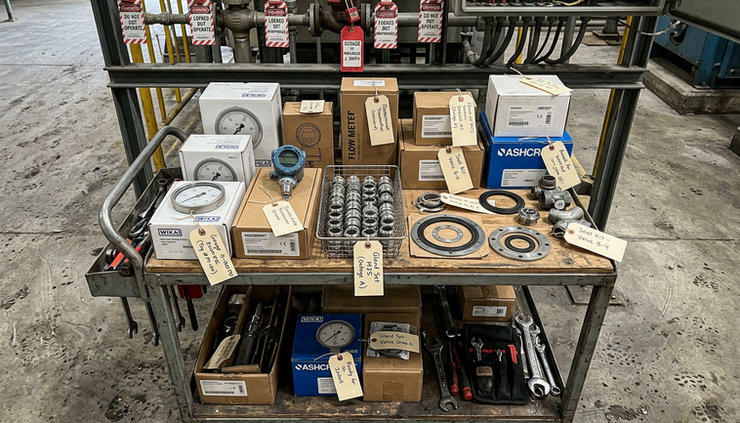
A stronger shutdown starts with the small items
Instrumentation spares rarely take up much space, but they carry real shutdown risk. A single missing sensor, meter or probe can delay testing, hold up recommissioning or force a temporary workaround that no one wanted.
The practical answer is simple. Identify the critical instruments early. Confirm the details before ordering. Check what is already in the store. Use ProSense Instruments as an Australian purchasing contact for replacement instrumentation, with availability and lead times confirmed for each order. Then prepare each spare so it is ready for the work front, not just delivered to site.
A shutdown plan that treats instruments with this level of care gives the team fewer surprises, cleaner commissioning and a better chance of restarting on schedule.


Comments