
How Phase Rotation Meters Prevent Wrong Direction in Three Phase Motors
- 14 hours ago
- 9 min read
A three phase motor can be wired neatly, tightened correctly, and still run the wrong way. That is the quiet risk in many new installations, motor replacements, plant upgrades, and temporary power hookups.
When the phase sequence is wrong, the motor’s rotating magnetic field turns in the opposite direction. The motor may start, sound normal for a moment, and then drive the connected load backward. For a simple conveyor, that can mean spilled product. For pumps, fans, and compressors, it can mean poor performance, mechanical stress, overheating, or fast damage.
A phase rotation meter, also called a phase-sequence meter, gives a quick check before that happens. It verifies the order of the three supply phases so the person connecting the equipment can confirm that the motor will rotate in the intended direction before the load is put at risk.

Why phase rotation matters in three phase systems
Three phase power uses three alternating currents that are offset from each other. The order in which those phases reach their peaks is the phase sequence. Common labels include `L1`, `L2`, and `L3`, or `A`, `B`, and `C`.
A three phase motor uses that sequence to create a rotating magnetic field. If the phase order is `L1-L2-L3`, the motor turns one direction. If two phases are swapped, the sequence reverses, and so does the magnetic field.
That means the rule is simple:
Swapping any two phases reverses the rotation of a three phase motor.
This is useful when a motor needs to be reversed on purpose. It is a problem when the swap happens by mistake.
Wrong direction can happen after:
A new motor is installed
A motor starter or variable frequency drive is replaced
Incoming utility service is reconnected
A generator is connected for backup or temporary power
A machine is moved to a new location
A panel is rewired during maintenance
Cables are extended, repaired, or re-terminated
The issue is not limited to large industrial sites. It can appear anywhere three phase equipment runs, including commercial HVAC systems, water treatment plants, machine shops, farms, cold storage facilities, and manufacturing lines.
What can go wrong when a motor runs backward
Some motors will tolerate a short jog in the wrong direction with no lasting harm. The connected load may not.
A bare motor sitting on a bench can often be bumped briefly to check shaft direction. A pump, fan, screw conveyor, or compressor attached to that motor changes the risk. The load has its own mechanical design, lubrication needs, seals, valves, airflow path, or fluid direction.
Equipment | What wrong rotation can cause |
Centrifugal pump | Little or no flow, seal stress, overheating, poor cooling, possible impeller loosening on some designs |
Positive displacement pump | Pressure problems, reverse flow, strain on couplings, valves, and seals |
Fan or blower | Reduced airflow, overheating in connected equipment, poor ventilation or cooling |
Refrigeration compressor | Lubrication issues, abnormal pressure behavior, fast mechanical damage on some designs |
Conveyor | Material moving the wrong way, jams, product loss, safety hazards |
Hydraulic power unit | No useful pressure, reverse flow paths, noise, heat, or component strain |
Fans deserve special attention because they can fool people. A fan running backward may still move some air, but much less than expected. It may sound close to normal while the system underperforms. The same is true for some pumps. A backward pump may vibrate, heat up, or produce weak flow, but the root cause may not be obvious right away.
Compressors can be less forgiving. Some scroll compressors, for example, are known for being sensitive to reverse rotation. They may produce unusual noise, fail to build proper pressure, or suffer damage if allowed to run that way.
The safest check is the one made before full operation, not after the machine sounds wrong.
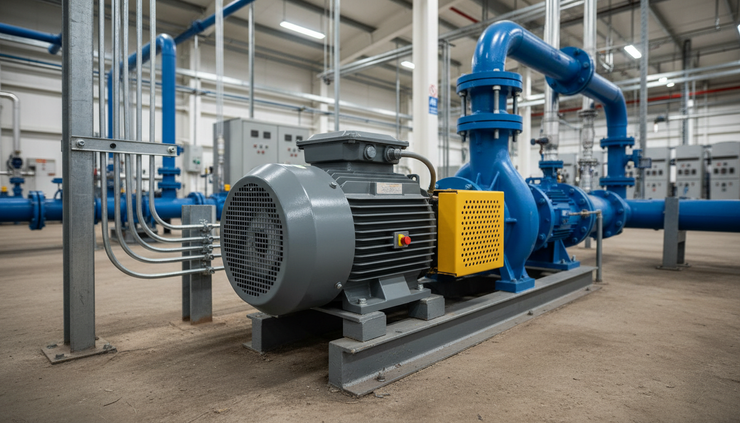
How a phase rotation meter works
A phase rotation meter connects to the three phase supply with three test leads. The meter detects the order of the phases and displays the result. Depending on the model, it may show clockwise rotation, counterclockwise rotation, `ABC`, `ACB`, or a similar indication.
The goal is not to measure motor speed. It is to confirm the sequence of the supply before connecting or energizing equipment.
Basic phase-sequence meters usually provide a simple visual indication. More advanced testers may include additional functions, such as:
Phase presence indication
Open phase detection
Voltage range checking
Motor rotation sensing without direct connection
Compatibility with common industrial supply voltages
Some instruments can also check motor rotation by sensing the magnetic field when the shaft is turned by hand, depending on the motor and tester design. That can help match supply sequence to the motor’s expected direction before coupling or startup.
The main value is speed and clarity. Instead of relying on assumptions, wire colors, previous labels, or a quick bump test, the meter gives a direct reading of phase order.
A practical check before starting a three phase motor
Electrical testing must be done by qualified personnel using proper personal protective equipment, rated test instruments, and site safety procedures. Three phase panels can carry lethal voltage and high fault current. A phase rotation meter is simple to use, but the environment is not always forgiving.
A typical verification process looks like this.
Confirm the equipment requirements
Before testing, identify the required rotation direction. Do not rely only on memory or on how the last motor was connected.
Look for:
Direction arrows on the pump, fan, gearbox, or motor
Motor nameplate information
Equipment manual instructions
Coupling or belt-drive layout
Process flow direction
Compressor documentation
Many pumps and fans have an arrow cast into the housing or marked near the shaft. That arrow matters more than a wire color or a panel label.
Test the incoming supply
Connect the phase rotation meter to the three phases at the point that feeds the motor starter, disconnect, drive, or load, depending on the job. The test point should match the part of the system being verified.
If the meter indicates the expected sequence, the supply phase order is correct at that point. If it indicates reverse sequence, two phases need to be interchanged before startup, assuming the connected equipment requires the opposite direction.
For a motor starter installation, checking at the load side after wiring can confirm the final output sequence to the motor. For a VFD-powered motor, follow the drive manufacturer’s instructions, since the output waveform can affect some testers. Many checks are better made on the line side of the drive, while motor direction is set and confirmed through the drive output and parameters.
Match the motor to the load
Once the phase sequence looks correct, the motor direction still needs to match the driven machine. The motor may have been replaced, leads may have been altered, or mechanical coupling may change the visible direction from one side to the other.
A short controlled jog may still be part of commissioning, but it should happen with the right precautions. On sensitive equipment, the manufacturer’s startup procedure should guide the method.
Never assume that clockwise means correct unless the reference point is clear. Clockwise viewed from the shaft end may be counterclockwise when viewed from the fan end. Direction labels should define the viewing position.
Correct the sequence if needed
If the rotation is wrong on a standard three phase motor supplied directly from a starter or disconnect, swapping any two motor supply phases reverses the rotation. For example, exchanging `L1` and `L2` changes the sequence.
After making any change:
Re-tighten and inspect terminations.
Repeat the phase sequence test.
Confirm motor direction using the approved startup method.
Check the load for normal sound, flow, pressure, current, and vibration.
Do not keep jogging a machine in the wrong direction while troubleshooting. Find the sequence problem, correct it, and then test again.

Phase rotation meters reduce guesswork during commissioning
Commissioning often happens under pressure. A production line needs to restart, a building system needs to come online, or a service crew needs to finish before the next shift. That pressure encourages shortcuts.
A phase rotation meter helps remove one of the common guesses from the job.
Wire colors cannot always be trusted. Labels can be wrong or missing. Existing cables may have been spliced. Temporary generators may not match the normal utility sequence. Two panels in the same facility can have different phase orders if previous work was inconsistent.
The meter gives a known reference.
This is especially useful when several motors must start in the same direction across a site. Once the phase sequence is verified at the service or distribution panel, downstream checks can confirm that panels, disconnects, and starters follow the same order.
That saves time when replacing motors later. If technicians know that a site maintains a standard phase sequence, they can still test, but they start from a more reliable baseline.
A good practice is to mark verified points clearly. Labels such as `ABC rotation verified` or `L1-L2-L3 clockwise at disconnect` can help future maintenance teams. The label should never replace testing, but it can reduce confusion.
Where phase checks fit in real jobs
Phase rotation testing is not a special task reserved for complex systems. It belongs in ordinary electrical work whenever direction matters.
Common examples include:
Pump stations
Multiple pumps may share a common wet well, header, or control panel. One backward pump can fail to move water while others carry the load. The problem may look like a blocked line, failed impeller, or control issue unless phase sequence is checked.
HVAC equipment
Fans, blowers, chillers, and compressors all depend on proper rotation. A backward blower can leave a space under-ventilated. A compressor can be at risk if it starts in reverse.
Manufacturing equipment
Mixers, augers, conveyors, saws, and machine tools often have direction-specific mechanics. Wrong rotation may ruin product, jam material, or create hazards for operators.
Temporary power
Generators and temporary distribution gear are frequent sources of sequence mismatch. A temporary power setup should be checked before it feeds motors or motor control equipment.
After utility or service work
If incoming service conductors are moved or reconnected, downstream motors may see a different sequence than before. A quick measurement can prevent a site-wide rotation problem.
In all of these cases, the cost of checking is small compared with the cost of finding out during operation.

Common mistakes that lead to wrong motor direction
Wrong rotation is easy to prevent, but it keeps happening because many mistakes look harmless at the time.
One common error is replacing a motor and assuming the new leads match the old motor exactly. Terminal markings may differ. Internal connections may not be arranged the same way. The motor may also be viewed from a different end when checking shaft direction.
Another mistake is trusting insulation color too much. Color coding helps, but it is only useful when everyone before you followed the same standard and no cable has been repaired incorrectly.
People also confuse phase rotation with polarity or voltage level. A supply can have the correct voltage and still have the wrong phase sequence. A meter that only checks voltage will not confirm rotation.
Skipping the check on temporary systems is another risk. A generator may run lights, heaters, and single-phase loads with no obvious issue while a three phase motor turns backward.
Then there is the casual bump test. Jogging a motor can be useful in the right setting, but it is not a replacement for careful sequence verification. On some connected loads, even a short reverse run can cause trouble. Where possible, verify phase order before the mechanical system is exposed to motion.
What to look for in a phase rotation meter
Most maintenance teams do not need a complicated instrument for basic sequence checks. They need a meter that is safe, clear, and rated for the systems they work on.
Look for these features:
A voltage rating that matches the site’s equipment
A proper measurement category rating for the panels being tested
Clear `ABC` and `ACB` or clockwise and counterclockwise indication
Test leads and clips suited to industrial terminals
Phase presence indication
A durable case for field use
Simple operation that reduces reading errors
For mixed environments, a tester that handles a broad voltage range can be useful. For motor shops and commissioning teams, a model that can also detect motor rotation may save time.
The best meter is the one that qualified staff will use consistently. A clear display, good leads, and fast setup matter because field checks often happen in tight spaces with limited room and poor lighting.
The habit that prevents expensive mistakes
Correct three phase rotation is a small detail with large consequences. Motors, pumps, fans, and compressors all depend on phase sequence to do their work in the right direction. When the sequence is wrong, the equipment may not fail instantly, but it can run poorly, overheat, damage components, or create unsafe conditions.
Phase rotation meters prevent that by turning an assumption into a measurement. They help verify the supply, confirm wiring changes, check temporary power, and support safer commissioning.
The practical rule is simple: test phase sequence before startup whenever direction matters. Then match the result to the machine’s required rotation, make any needed phase swap, and verify again. That habit takes only a short time, but it can save a motor, protect a process, and prevent a bad start from becoming an expensive repair.


Comments