Understanding the Key Differences Between AC and DC Clamp Meters
- Feb 12
- 3 min read
When working with electrical systems, measuring current safely and accurately is essential. Clamp meters offer a convenient way to measure current without disconnecting wires. But not all clamp meters are the same. Some measure only alternating current (AC), while others can measure both AC and direct current (DC). If your work involves batteries, solar panels, electric vehicles (EVs), or DC power supplies, knowing the difference between AC and DC clamp meters is crucial.
This post explains how AC and DC clamp meters work, their typical use cases, and what to look for when choosing the right clamp meter for your needs.

How Clamp Meters Measure Current
Clamp meters measure current by detecting the magnetic field generated by current flowing through a conductor. The meter’s jaws clamp around a single conductor, allowing current measurement without direct contact or breaking the circuit.
AC Clamp Meters
AC clamp meters use a transformer principle. The alternating current flowing through the conductor creates a changing magnetic field. The clamp meter’s sensor detects this changing field and converts it into a current reading. Because the magnetic field changes direction with AC, the meter can easily detect it.
DC Clamp Meters
Measuring DC current is more challenging because DC produces a steady magnetic field, not a changing one. To measure DC current, clamp meters use a Hall effect sensor. This sensor detects the strength of the magnetic field directly, allowing the meter to measure steady DC current.
Why Not All Clamp Meters Measure DC Current
Many basic clamp meters only measure AC current because the transformer method is simpler and less expensive. Adding DC measurement requires a Hall effect sensor, which increases the meter’s cost and complexity.
If you only work with household wiring or AC circuits, an AC-only clamp meter is usually sufficient. But if you work with batteries, solar systems, EVs, or any DC power source, you need a clamp meter that can measure DC current.
Typical Use Cases for AC and DC Clamp Meters
AC Clamp Meters
Residential and commercial electrical wiring
HVAC systems
Motor and appliance troubleshooting
Circuit breaker testing
DC Clamp Meters
Battery testing and maintenance
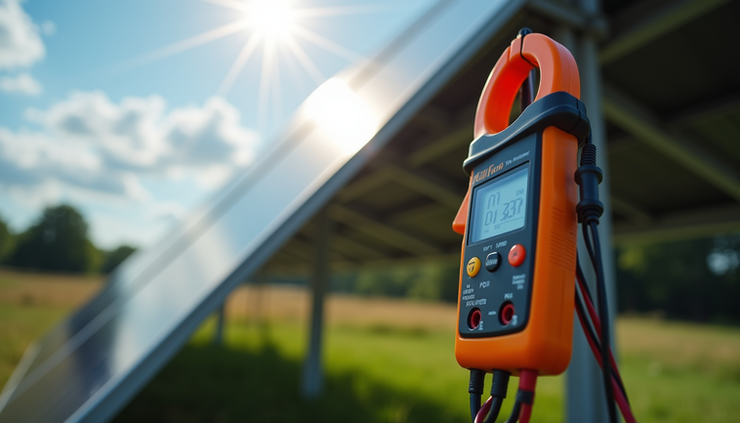
Solar panel system installation and troubleshooting
Electric vehicle (EV) charging and maintenance
DC power supply monitoring in industrial equipment
What to Look for in Clamp Meter Specifications
When choosing a clamp meter, check the following features:
AC/DC Measurement Capability
Confirm if the meter measures both AC and DC current. This is essential for work involving DC circuits.
Current Range
Look for a meter that covers the current range you expect to measure. For example, solar systems may require meters that measure up to 100A or more.
Accuracy
Check the accuracy rating, usually given as a percentage. Higher accuracy is important for precise measurements.
Jaw Size
The clamp’s jaw size determines the maximum conductor diameter it can measure. Larger cables need bigger jaws.
Additional Functions
Some clamp meters include voltage measurement, resistance testing, continuity checks, and data logging. These can add value depending on your needs.
Safety Ratings
Ensure the meter has appropriate safety ratings (CAT III, CAT IV) for the environments where you will use it.
Practical Tips for Using Clamp Meters
Always clamp around a single conductor, not a cable with multiple wires, to get an accurate reading.
For DC measurements, ensure the meter is set to DC mode.
When measuring high currents, use meters with appropriate current ranges to avoid damage.
Regularly calibrate your clamp meter to maintain accuracy.
Use clamp meters with clear displays and backlighting for better visibility in low-light conditions.
Summary
Choosing between an AC and DC clamp meter depends on the type of electrical systems you work with. AC clamp meters are suitable for most household and commercial wiring tasks. DC clamp meters are necessary for battery systems, solar power, EVs, and other DC applications.
Look for meters with clear AC/DC measurement capabilities, suitable current ranges, and safety ratings. Using the right clamp meter improves safety, accuracy, and efficiency in your electrical work.
If you work with both AC and DC systems, investing in a clamp meter that measures both currents will save time and reduce the need for multiple tools.


Comments