Understanding Pressure Units & Their Industrial Importance and Conversion Essentials
- 4 days ago
- 3 min read
Pressure plays a crucial role in many industries, from manufacturing and automotive to scientific research and hydraulics. Yet, understanding pressure units and their correct application can be confusing. Different regions and sectors use various units, and accurate conversion between them is essential, especially when calibrating sensors or designing systems. This post breaks down the most common pressure units, explains their significance, and provides practical guidance on converting between them.

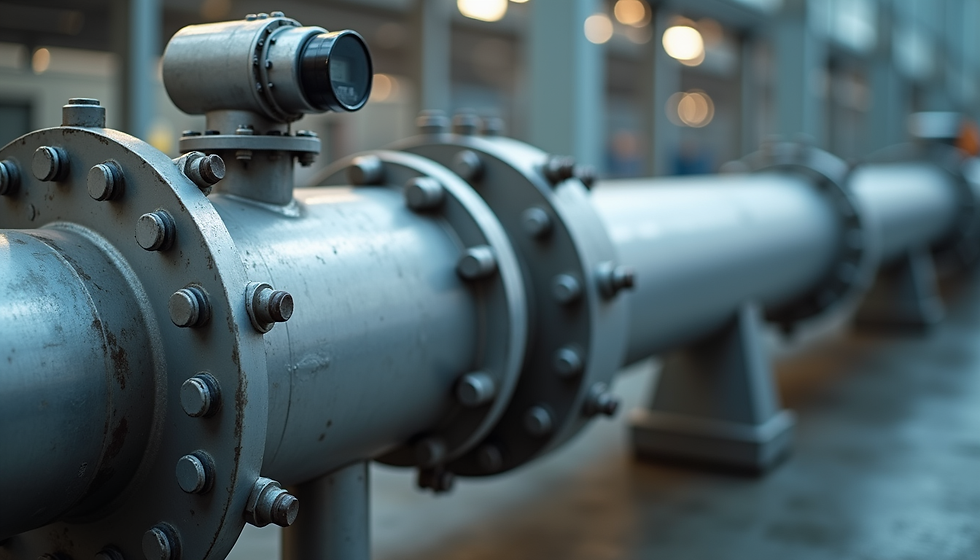
Close-up view of an industrial pressure gauge showing pressure readings
Common Pressure Units and Their Uses
Pressure is defined as force applied per unit area. The units used to measure pressure vary depending on the industry, country, and application. Here are the most widely used pressure units:
Bar
Definition: One bar equals 100,000 pascals (Pa).
Usage: Bar is popular in Europe and commonly used in hydraulics and meteorology.
Example: Hydraulic systems in European factories often specify pressure in bars. For instance, a hydraulic press might operate at 200 bar.
Psi (Pounds per Square Inch)
Definition: Psi measures pressure as pounds of force applied to one square inch of area.
Usage: This unit is standard in the United States, especially in automotive, aerospace, and industrial sectors.
Example: Tire pressure is usually measured in psi. A typical car tire pressure is around 32 psi.
Pascal (Pa)
Definition: The pascal is the SI (International System of Units) unit for pressure, defined as one newton per square meter.
Usage: Used in scientific research, engineering, and industries requiring precise measurements.
Example: Atmospheric pressure at sea level is approximately 101,325 Pa.
Kilogram per Square Centimeter (kg/cm²)
Definition: This unit measures pressure as kilograms of force per square centimeter.
Usage: Found in some industrial contexts, especially in countries using the metric system but not fully adopting SI units.
Example: Boiler pressures in some factories are specified in kg/cm², such as 10 kg/cm².
Megapascal (MPa)
Definition: One megapascal equals one million pascals.
Usage: Used for high-pressure measurements in engineering, materials testing, and hydraulics.
Example: The tensile strength of steel is often expressed in MPa, such as 250 MPa.
Why Accurate Unit Conversion Matters
In industries where pressure sensors and gauges are critical, accurate unit conversion is vital. Incorrect conversions can lead to:
Sensor miscalibration: Leading to faulty readings and potential safety hazards.
System failures: Pressure systems designed with wrong units may fail under stress.
Costly downtime: Fixing errors caused by unit confusion can halt production.
For example, a hydraulic system designed to operate at 150 bar but mistakenly set to 150 psi will experience a significant pressure mismatch. Since 1 bar ≈ 14.5 psi, 150 psi is only about 10 bar, which could cause underperformance or damage.
Pressure Conversion Table: Bar, Psi, and Pascal
Here is a handy table showing key pressure values converted between bar, psi, and pascal:
| Pressure (Bar) | Pressure (Psi) | Pressure (Pascal) |
|----------------|----------------|----------------------|
| 0.1 | 1.45 | 10,000 |
| 0.5 | 7.25 | 50,000 |
| 1 | 14.5 | 100,000 |
| 5 | 72.5 | 500,000 |
| 10 | 145 | 1,000,000 |
| 50 | 725 | 5,000,000 |
| 100 | 1,450 | 10,000,000 |
| 150 | 2,175 | 15,000,000 |
This table helps engineers and technicians quickly convert between units without errors. For sensor calibration, always verify the unit your device uses and convert accordingly.
Practical Examples of Pressure Unit Use
Automotive Industry
Tire pressure gauges in the U.S. display psi, while European cars often use bar. When importing vehicles or parts, technicians must convert units to ensure proper inflation and safety.
Hydraulic Systems
Hydraulic machinery in Europe typically uses bar for pressure ratings. A hydraulic pump rated at 250 bar must be converted to psi (about 3625 psi) when used with American equipment.
Scientific Research
Scientists prefer pascals for precision. Atmospheric pressure, vacuum levels, and gas pressures are measured in pascals or kilopascals (kPa). For example, weather stations report pressure in hPa (hectopascals), where 1 hPa = 100 Pa.
Tips for Accurate Pressure Measurement and Conversion
Always check the unit label on sensors and gauges before recording data.
Use reliable conversion tools or formulas to avoid mistakes.
Calibrate sensors regularly using standards traceable to SI units.
Understand the context: Some industries prefer certain units for historical or practical reasons.
Document conversions clearly in reports and manuals to avoid confusion.


Comments