
Turbine Flow Meters Explained: Working Principles, Uses, and How to Choose the Right One
Flow measurement looks simple until the numbers start driving real decisions. A small error can affect batch quality, custody transfer, chemical dosing, fuel consumption, or equipment protection. That is why the choice of flow meter matters.
Turbine flow meters remain a popular option because they are compact, responsive, and capable of high accuracy in the right service. They are especially useful for clean, low-viscosity liquids and gases where repeatable measurement matters. Still, they are not the right answer for every pipe, fluid, or process.
This guide explains how turbine meters work, where they fit best, how they compare with other flow technologies, and what to check before selecting one.

How a turbine flow meter works
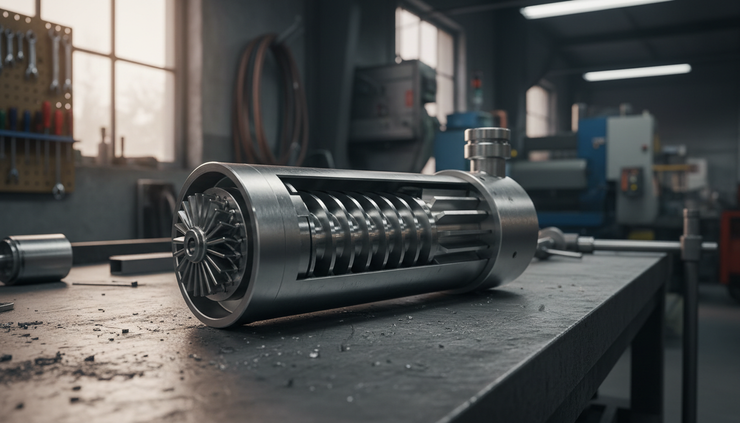
A turbine flow meter measures flow by placing a small rotor directly in the fluid stream. As liquid or gas passes through the meter body, the force of the moving fluid spins the rotor. The faster the fluid moves, the faster the rotor turns.
A sensor detects each blade as it passes. This can be done magnetically, inductively, or through another pickup method, depending on the meter design. The meter electronics convert those pulses into flow rate and total flow.
The basic relationship is simple:
More flow creates faster rotor speed.
Faster rotor speed creates more pulses.
The pulse frequency is converted into flow rate.
Each meter has a calibration factor, often called a K-factor. This tells the system how many pulses equal a unit of volume. For example, the electronics may count a known number of pulses per gallon, liter, cubic foot, or cubic meter.
The main parts inside the meter
Most turbine meters include:
A meter body that guides the fluid through the measuring section
A rotor with angled blades
Bearings or supports that allow the rotor to spin
A pickup sensor that detects blade movement
A transmitter or flow computer that converts pulses into usable readings
Many designs also include flow straighteners or internal supports to reduce swirl before the fluid reaches the rotor.
Why fluid condition matters so much
Turbine meters are mechanical devices. The rotor must spin freely, and the fluid must strike the blades in a predictable way. That makes them sensitive to certain conditions.
They perform best with:
Clean fluids
Stable flow profiles
Low to moderate viscosity
Minimal suspended solids
Proper upstream and downstream straight pipe
Dirt, scale, fibers, bubbles, or sudden viscosity changes can reduce accuracy or damage internal parts. That does not make turbine meters fragile in every case, but it does mean the application must be a good match.
Where turbine flow meters are used
Turbine flow meters are widely used in industrial, utility, and process applications. Their fast response and repeatability make them useful anywhere operators need dependable measurement of clean liquid or gas.
Oil, fuel, and petrochemical service
Turbine meters are common in fuel measurement, loading racks, refined petroleum transfer, and lube oil systems. They can provide accurate measurement for products such as diesel, gasoline, kerosene, and light oils when the fluid is clean and the viscosity stays within the meter’s rated range.
In custody transfer applications, turbine meters may be paired with temperature correction, pressure compensation, proving systems, and flow computers. In these cases, installation and calibration practices become just as important as the meter itself.
Water and wastewater processes
In clean water systems, turbine meters can measure process water, cooling water, deionized water, and treated water. They are often selected when operators need a compact meter with good accuracy and a pulse output.
They are usually less suitable for raw wastewater or sludge because solids can foul the rotor. For dirty water service, magnetic or ultrasonic meters may be a better fit.
Chemical processing
Chemical plants use turbine meters for batching, blending, dosing, and process control. Compatibility with the fluid is critical. The meter body, rotor, shaft, seals, and bearings must all resist corrosion.
For clean, low-viscosity chemicals, a turbine meter can provide fast response and repeatable batch totals. For viscous, abrasive, or coating chemicals, another technology may last longer.
Food, beverage, and pharmaceutical production
Sanitary turbine meters are available for clean-in-place systems, purified water, beverages, and light food products. Hygienic design matters in these applications. Smooth internal surfaces, sanitary fittings, and cleanable materials help reduce contamination risks.
They are not ideal for products with pulp, particles, high viscosity, or sticky residues. A meter used for water or clear beverage is one thing. A meter used for syrup or sauce faces a very different challenge.
Power generation and utilities
Power plants and utility systems may use turbine meters for feedwater, fuel gas, cooling systems, and auxiliary flows. Their fast response can help with monitoring and control, especially in clean fluid circuits.
Gas turbine meters are also common in natural gas measurement, though gas service requires careful attention to pressure, density, flow range, and calibration.
Advantages of turbine flow meters
Turbine meters have stayed in use for a long time because they offer a strong mix of accuracy, response, and cost for suitable applications.
High accuracy in clean service
A properly sized and calibrated turbine meter can deliver high accuracy, especially with clean, steady fluids. It can also offer very good repeatability, which is often just as valuable in batching and process control.
Repeatability means the meter gives consistent results under the same conditions. In many production settings, that consistency helps maintain product quality and reduce waste.
Fast response to flow changes
Because the rotor reacts quickly to changes in velocity, turbine meters respond well to changing flow rates. This makes them useful for batch filling, fuel dispensing, dosing, and control loops where slow readings can cause overshoot.
Compact size and simple signal output
Turbine meters are usually smaller and lighter than some other meter types with similar accuracy. Their pulse output is also easy to integrate with counters, PLCs, displays, and flow computers.
Good value for many applications
Compared with Coriolis meters and some ultrasonic systems, turbine meters can be a cost-effective choice. They provide strong performance without the higher purchase price of some advanced technologies, as long as the process conditions are suitable.
Disadvantages and limits to understand
The biggest mistake is treating a turbine meter as a universal solution. It is a strong tool, but it has clear limits.
Moving parts require care
The rotor and bearings are exposed to the process fluid. Over time, wear can affect performance. Abrasive particles, debris, or poor lubrication properties can shorten meter life.
A turbine meter may need periodic inspection, cleaning, or recalibration. This is different from many non-intrusive or no-moving-part technologies.
Dirty or two-phase flow can cause problems
Solids can jam or wear the rotor. Gas bubbles in liquid service can disturb the measurement. Liquid droplets in gas service can cause errors or damage. If the flow is not a single clean phase, performance may suffer.
Viscosity changes can affect accuracy
Turbine meters are velocity-based. Changes in viscosity can alter rotor behavior, especially at lower flow rates. Some meters are designed for higher viscosity fluids, but every model has limits.
For fluids with wide temperature swings or changing composition, check how viscosity changes across the operating range.
Installation conditions matter
Elbows, valves, pumps, reducers, and other fittings can create swirl or distorted velocity profiles. A turbine meter needs a stable flow profile to perform well. Poor installation can make a good meter look inaccurate.
How turbine meters compare with other flow technologies
No flow meter technology wins in every category. The best choice depends on the fluid, required accuracy, pipe size, pressure, temperature, budget, and maintenance expectations.
Technology | Strengths | Limits |
Turbine | Accurate, fast response, compact, good for clean fluids | Has moving parts, sensitive to dirt and flow profile |
Magnetic | Excellent for conductive liquids, no moving parts, handles dirty water well | Does not work on non-conductive fluids such as oils or gases |
Coriolis | Very high accuracy, measures mass flow and density | Higher cost, pressure drop and size limits can matter |
Ultrasonic | No obstruction with clamp-on options, useful for large pipes | Accuracy depends on installation, pipe condition, and fluid profile |
Positive displacement | Strong accuracy at low flow, good for many viscous fluids | Moving parts, pressure drop, not ideal for dirty fluids |
Vortex | Good for steam, gas, and some liquids, no rotor bearings | Needs enough velocity, can struggle at low flow |
Differential pressure | Widely understood, handles many services | Permanent pressure loss, lower turndown in many setups |
For clean liquid batching, turbine and positive displacement meters often compete. For conductive dirty water, magnetic meters usually have an edge. For high-value mass measurement, Coriolis meters often justify their extra cost. For large pipes where cutting into the line is difficult, ultrasonic meters may be attractive.
The choice should start with the process, not the technology.

Key factors to consider when selecting a turbine flow meter
A good selection starts with data. Before choosing a meter, define the fluid, conditions, and measurement goal as clearly as possible.
Accuracy and repeatability
Accuracy tells you how close the reading is to the true flow. Repeatability tells you how consistently the meter reads under the same conditions.
Do not look at the best-case accuracy number alone. Ask these questions:
Does the stated accuracy apply across the full flow range?
Was the meter calibrated with a similar fluid?
Does the accuracy include transmitter and electronics performance?
Will temperature, pressure, or viscosity changes affect the result?
For batching, repeatability may matter most. For custody transfer, absolute accuracy and traceable calibration become critical.
Flow range and turndown
Every turbine meter has a minimum and maximum flow rate. Below the minimum, the rotor may not spin predictably. Above the maximum, the meter can lose accuracy or suffer damage.
Turndown is the ratio between maximum and minimum measurable flow. For example, a meter that measures from 10 to 100 units per minute has a 10:1 turndown.
Choose a meter so normal operating flow sits comfortably within the rated range, not at the edge. If the process often runs near the low end, confirm the meter can maintain accuracy there.
Fluid viscosity, density, and cleanliness
Clean, low-viscosity fluids are the easiest fit. Higher viscosity fluids create more drag on the rotor, especially at low flow. Density matters more in gas service and in applications where pressure and temperature vary.
Check for:
Suspended solids
Fibers or debris
Entrained air or vapor
Wax, scale, or coating tendencies
Corrosion risks
Lubricating properties
A strainer or filter may protect the meter, but it also adds maintenance and pressure drop. Do not use a filter as a patch for a process that is fundamentally too dirty for a turbine meter.
Materials of construction
The meter materials must match the fluid and environment. Common body materials include stainless steel, carbon steel, and engineered plastics. Internal parts may use stainless steel, tungsten carbide, ceramics, or special alloys.
Pay close attention to seals and bearings. These parts often determine whether the meter survives long-term chemical exposure.
Pipe size and pressure drop
Turbine meters create some pressure drop because the rotor sits in the flow path. In many systems this is acceptable, but low-pressure systems or gravity-fed processes may not tolerate much loss.
Pipe size also affects velocity. A meter that matches the line size is not always the best choice. In some cases, a different meter size with reducers provides better velocity through the measuring section. This must be done carefully to avoid flow disturbance.
Installation requirements
Poor installation is one of the most common causes of bad readings. A turbine flow meter usually needs straight pipe upstream and downstream so the fluid reaches the rotor evenly.
Common good practices include:
Install the meter in the correct flow direction.
Provide enough straight pipe before and after the meter.
Keep the pipe full in liquid service.
Avoid installing directly after pumps, elbows, control valves, or partially open valves.
Use a flow conditioner if the piping layout creates swirl.
Support the pipe so vibration does not stress the meter.
Install strainers where debris is possible.
Follow the manufacturer’s orientation limits.
For liquid service, avoid locations where air can collect. For gas service, account for pressure and temperature effects. In both cases, make sure the sensor and transmitter are suitable for the area classification and environmental conditions.
Calibration and maintenance plans
Calibration confirms the meter’s K-factor under known conditions. Some applications only need periodic checks. Others require traceable calibration and proving.
Maintenance needs depend on the fluid and duty cycle. A meter in clean filtered water may run for a long time with little attention. A meter in a fuel system with occasional debris may need regular strainer cleaning and inspection.
A practical maintenance plan should include:
Checking pulse output and signal stability
Inspecting strainers or filters
Watching for bearing wear signs
Comparing totals against known batch volumes
Recalibrating at intervals based on process risk
Common mistakes to avoid
Many turbine meter problems come from selection or installation errors rather than meter defects.
One common mistake is oversizing. If the meter is too large, normal flow may fall near the minimum range. The rotor may respond poorly, and accuracy will suffer. A smaller meter that creates the right velocity can perform better.
Another mistake is ignoring upstream disturbance. A meter placed too close to an elbow, pump, or control valve may see swirl instead of a clean velocity profile. The display may look stable while still being wrong.
A third mistake is choosing based on price alone. A lower-cost meter can become expensive if it fails early, needs frequent cleaning, or causes bad batches. Total cost includes downtime, maintenance, calibration, and measurement risk.
When a turbine meter is the right choice
A turbine meter is often a strong fit when the application has:
Clean liquid or gas
Stable viscosity
Moderate to high flow velocity
A need for good accuracy and repeatability
Acceptable pressure drop
Enough straight pipe for proper installation
A maintenance plan for mechanical parts
It may not be the best choice when the fluid is dirty, abrasive, sticky, highly viscous, or mixed with gas and liquid phases. In those cases, compare magnetic, Coriolis, ultrasonic, vortex, or positive displacement options before deciding.

A practical selection checklist
Before ordering a turbine meter, collect the information that affects performance. This simple checklist can prevent costly surprises.
Process data
Fluid name and composition
Liquid or gas phase
Normal, minimum, and maximum flow rate
Operating pressure and temperature
Viscosity across the full temperature range
Density or specific gravity
Cleanliness and particle content
Measurement needs
Required accuracy
Required repeatability
Local display, pulse output, or analog output
Totalizing, batching, or control use
Calibration requirements
Regulatory or custody transfer needs
Mechanical and installation details
Pipe size and schedule
Connection type
Available straight pipe
Flow direction and meter orientation
Pressure drop limits
Hazardous area requirements
Material compatibility
Access for maintenance
Lifecycle factors
Expected service life
Cleaning needs
Spare parts availability
Recalibration interval
Cost of downtime
Operator skill and maintenance capability
The right meter is not just the one with the best accuracy on a data sheet. It is the one that can meet that accuracy in the actual pipe, with the actual fluid, under real operating conditions.
The takeaway
Turbine flow meters are accurate, responsive, and cost-effective when used in the right application. Their working principle is straightforward, but their performance depends heavily on clean flow, proper sizing, stable fluid properties, and careful installation.
Use them for clean liquids and gases where repeatable measurement matters. Be cautious with dirty, abrasive, viscous, or two-phase fluids. Compare them with magnetic, Coriolis, ultrasonic, vortex, differential pressure, and positive displacement meters before making a final choice.
A well-selected turbine meter can deliver years of reliable service. A poorly matched one can become a maintenance problem. Start with the fluid, define the measurement goal, check the installation, and choose the technology that fits the process rather than forcing the process to fit the meter.


Comments