Integrating Pressure and Flow Sensors to Enhance AI Infrastructure Reliability
- 4 days ago
- 3 min read
Artificial Intelligence (AI) depends heavily on physical infrastructure, even though it often seems like a purely digital field. The massive computing power needed for AI tasks such as machine learning training, large language model inference, and real-time analytics requires data centers and edge computing facilities that consume huge amounts of energy and generate intense heat. Managing this heat and maintaining environmental stability is critical to keeping AI systems running smoothly and efficiently. This is where pressure, flow, and environmental sensors come into play. These sensors provide the data needed to control cooling systems, liquid circulation, and air handling, ensuring AI infrastructure remains reliable and energy-efficient.
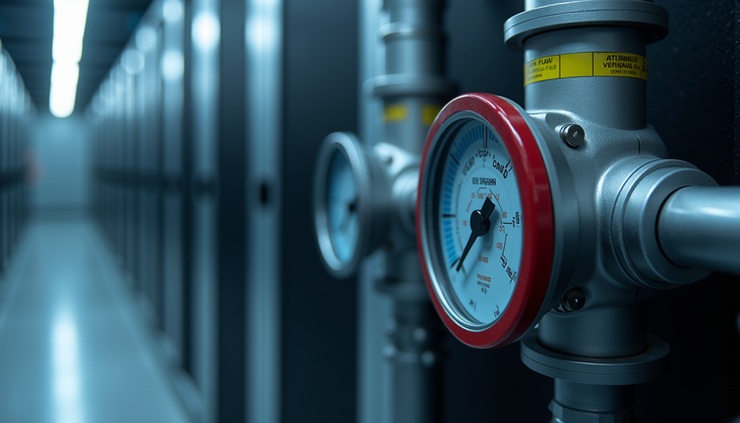
The Role of Pressure Sensors in Liquid Cooling Systems
As AI servers and GPUs grow more powerful, they produce more heat. Traditional air cooling often cannot keep up with this heat output. Liquid cooling solutions, such as direct-to-chip cooling, cold plate systems, and immersion cooling, have become essential. Pressure sensors are critical in these systems for several reasons:
Monitoring coolant pressure in closed-loop liquid cooling circuits to maintain stable flow.
Ensuring pump operation by detecting pressure changes that indicate pump performance.
Detecting leaks or blockages early by identifying abnormal pressure drops or spikes.
Accurate pressure data helps distribute coolant evenly across server racks, protecting sensitive electronics from overheating. It also prevents failures that could cause costly downtime or hardware damage.
How Flow Sensors Support AI Infrastructure
Flowmeters measure the rate of coolant or air moving through the system. In AI data centers, maintaining the right flow rate is vital for effective heat removal. Flow sensors contribute by:
Verifying coolant circulation to ensure all components receive adequate cooling.
Detecting flow interruptions that could signal pump failures or clogged pipes.
Optimizing energy use by adjusting pump speeds and fan operation based on real-time flow data.
For example, if a flow sensor detects reduced coolant flow, the system can increase pump speed or trigger maintenance alerts before overheating occurs.
Environmental Sensors for Stable AI Operations
Temperature and humidity sensors monitor the data center environment to maintain conditions that support hardware longevity and performance. These sensors help by:
Tracking temperature hotspots to adjust cooling dynamically.
Controlling humidity levels to prevent static electricity or condensation, both harmful to electronics.
Providing data for predictive maintenance by identifying trends that precede equipment failure.
Maintaining a stable environment reduces the risk of unexpected shutdowns and extends the life of expensive AI hardware.
Integrating Sensor Data for Intelligent Control
The true power of pressure, flow, and environmental sensors lies in their integration. By combining data from multiple sensors, AI infrastructure management systems can:
Adjust cooling systems automatically based on real-time conditions.
Balance energy consumption with cooling needs to improve efficiency.
Predict and prevent failures by spotting anomalies early.
For instance, if pressure sensors detect a drop in coolant pressure and flow sensors report reduced circulation, the system can alert technicians or switch to backup cooling before hardware overheats.
Practical Examples of Sensor Use in AI Facilities
Google’s Data Centers use advanced sensor networks to monitor cooling systems, enabling them to reduce energy use while maintaining performance.
NVIDIA’s HPC Clusters employ pressure and flow sensors in their liquid cooling setups to support high-density GPU workloads without overheating.
Edge Computing Sites in remote locations rely on environmental sensors to maintain stable conditions despite external temperature fluctuations.
These examples show how sensor integration supports the demanding needs of AI workloads.
Choosing the Right Sensors for AI Infrastructure
Selecting sensors for AI facilities involves considering:
Accuracy and reliability to ensure precise monitoring.
Compatibility with existing cooling and control systems.
Durability to withstand harsh data center environments.
Ease of integration with automation platforms.
Pressure transmitters with digital outputs and flowmeters with minimal pressure drop are often preferred. Environmental sensors should offer fast response times and wide measurement ranges.
Future Trends in Sensor Technology for AI
Sensor technology continues to evolve, with trends including:
Wireless sensor networks for easier installation and scalability.
Smart sensors with onboard processing to reduce data loads.
Integration with AI-driven analytics to enhance predictive maintenance.
Miniaturization to fit into compact cooling solutions.
These advances will further improve AI infrastructure reliability and efficiency.


Comments